Why AI Generators Aren't Enough: The Case for Editable, Remixable AI Outputs
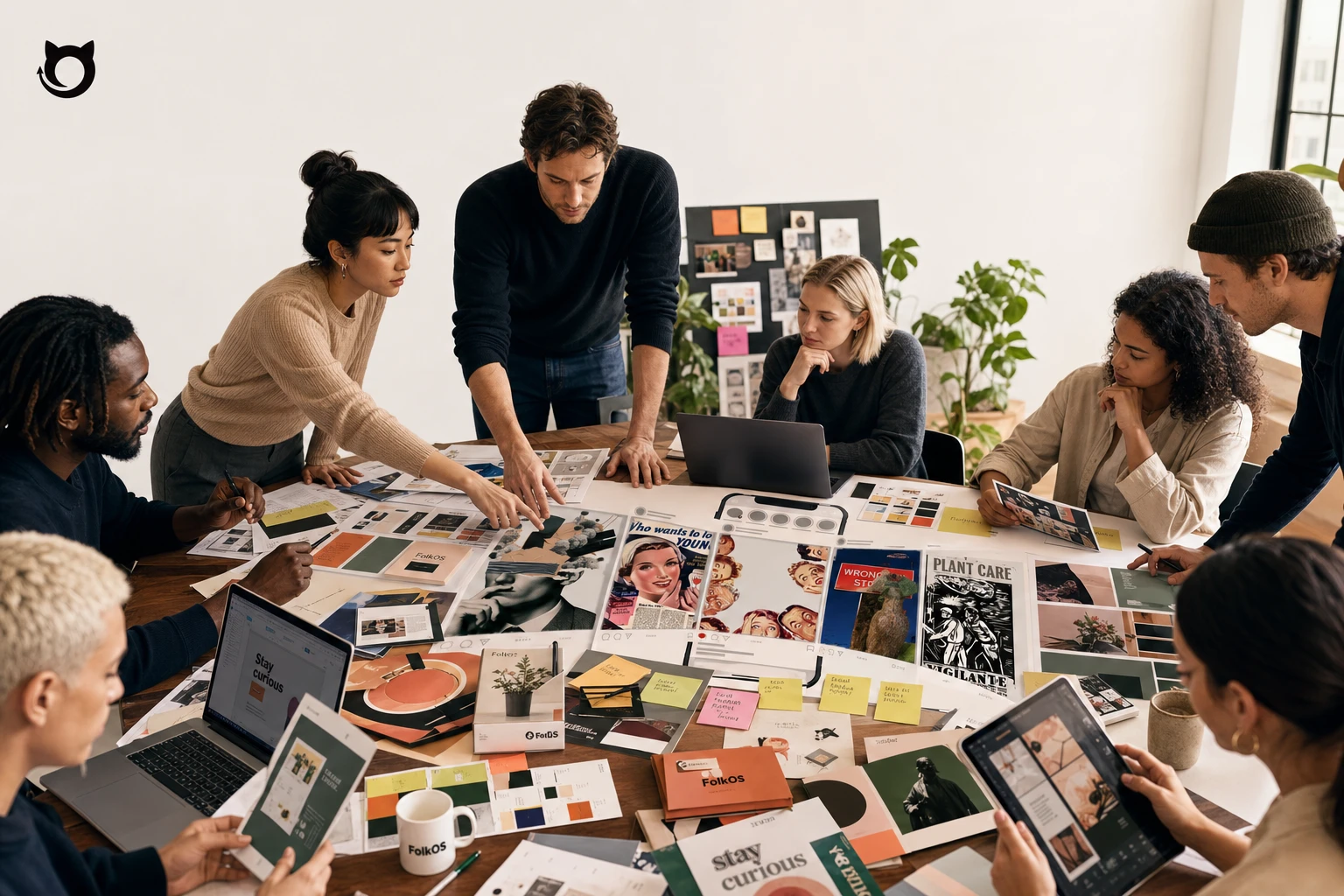
Impressive demos don't always make good workflows. Here's what's actually missing from most AI tools.
Open any AI tool today and you'll likely be impressed within the first five minutes. The image looks better than you expected. The slide deck has a coherent structure. The video is rough but usable. The copy is surprisingly on-brand.
Then you try to do something with the output.
You want to adjust the image — but the tool doesn't have an editor, so you export it and open Photoshop. You want to update a slide — but the deck exported as a PDF. You want to trim the video — but the clip is locked in the platform's proprietary format. You want to repurpose the copy for a different channel — but you're starting from scratch because the tool doesn't remember what you made last time.
This is the experience gap that most people don't talk about when they evaluate AI tools. The generation is impressive. The editability is an afterthought.
The Generator Mindset vs. The Workspace Mindset
Most AI tools were designed around a single interaction: you put in a prompt, you get out an output. That's the generator mindset — optimized for the moment of creation, not for what happens next.
It made sense as a starting point. When AI-generated images first became commercially viable, the question was simply: can AI make something good? When AI writing assistants arrived, the bar was: can it produce readable prose?
Those questions are answered. The bar has moved.
The question now isn't whether AI can generate something impressive. It's whether the output is actually useful in the context of real work — work that involves editing, collaboration, iteration, versioning, and reuse across multiple formats and channels.
This is the workspace mindset: AI outputs aren't endpoints. They're starting points. The value isn't in the generation alone — it's in what you can do with what's generated.
What "Editable AI Outputs" Actually Means
The phrase sounds obvious. Of course outputs should be editable. But the gap between what most tools offer and what real editability requires is larger than it appears.
True editability means a few things working together:
The output lives in a persistent environment. It doesn't disappear when you close the chat. It's not locked in an export. It exists in a workspace where you can return to it, modify it, and build on it — tomorrow, next week, next month.
The structure is preserved. An editable presentation isn't a PNG of slides — it's a deck where you can change text, swap sections, adjust layouts, and add new content without rebuilding from scratch. An editable video isn't a rendered file — it's a project with discrete components you can swap, trim, and reorder.
Changes are non-destructive. You can try a different direction without losing the original. You can iterate without starting over. This sounds basic, but most AI generators don't support it — once you've generated an output, the path back is to generate again from scratch.
The output can propagate. When you edit the source — update the brief, change the brand parameters, revise the messaging — the downstream outputs can update accordingly. This is the difference between an AI output and an AI asset: an asset stays connected to its source.
The Remix Problem
There's a related challenge that rarely gets discussed: reusability across formats.
Most content that a team produces serves multiple channels. A campaign brief becomes a deck, a social post, a short video, a press release, and a landing page. A product demo becomes a highlight reel, a case study, and a sales enablement doc. A research report becomes an executive summary, an infographic, and a webinar presentation.
Today, moving content across formats almost always means starting over. You can't take a presentation and tell your AI image tool to generate visuals that match it. You can't take a document and ask your video tool to produce a clip based on it. The tools don't talk to each other, and they don't share context.
This is the remix problem: the ability to take what you've already made and transform it into something new, without losing the thread that connects them.
Solving the remix problem requires something that point-solution generators can't provide: a shared workspace where all outputs — documents, images, videos, decks, spreadsheets — exist together, reference each other, and can be combined and transformed by agents that understand the full context.
A Practical Comparison
It's useful to look at how this plays out across some of the tools people commonly use for AI-assisted content production.
Design tools with AI features (like Canva's AI capabilities or Adobe Express) are powerful within the design context. But the AI functions are additive to a design workflow, not the core of it. If your work starts with a brief and needs to produce a deck, a video, and a set of images, these tools handle one piece of the puzzle well and leave the rest to you.
AI presentation builders (like Gamma or Tome) have made slide generation genuinely fast. But slides are one format. When your campaign needs a video and a content calendar built from the same brief, a presentation tool's scope ends at the slide edge.
AI video tools (like Runway) have pushed video generation to impressive places. But video in isolation isn't a workflow. The clip still needs to connect to the campaign's visual identity, the deck, the social copy — none of which Runway helps you manage.
The pattern is consistent: each of these tools is impressive within its lane. None of them solve the cross-format, persistent-workspace problem that real production workflows require.
What to Look For Instead
If you're building or evaluating tools for a team that produces content at scale, here are the questions worth asking before committing to a tool — or a tool stack:
Where does the output live? If the answer is "in a chat thread" or "in an export," the tool is a generator, not a workspace. That's fine for some use cases, but it's not the foundation of a production workflow.
Can I come back and edit it? Not regenerate — edit. The original output, with its structure intact, in a persistent environment. If the answer is no, factor in the cost of rebuilding from scratch every time you need a revision.
Can one piece of content become multiple formats? Can a document become a deck? Can a brief become a video script? Can a visual asset be remixed for a different channel? If each format requires a separate tool and a fresh start, you're paying the remix tax on every piece of content you produce.
Can my team build templates from this? Institutional workflows are more valuable than individual outputs. If the tool doesn't let you define repeatable agent workflows that your whole team can run, you're optimizing for the individual and leaving the organization behind.
The Standard Is Shifting
The first generation of AI tools competed on output quality. The second generation is competing on workflow integration. The tools that will define how teams work over the next several years aren't the ones that generate the most impressive single outputs — they're the ones that make AI outputs persistent, editable, and remixable across every format a modern team needs.
Generators got us here. Workspaces are what comes next.
The question was never whether AI could make something good. It was always whether you could actually use it.
Folkos: The agent workspace, reimagined.
Build once, remix everywhere.
Get started free →