How a Small Chip Brand Can Build Product, UI, and Marketing at the Same Time
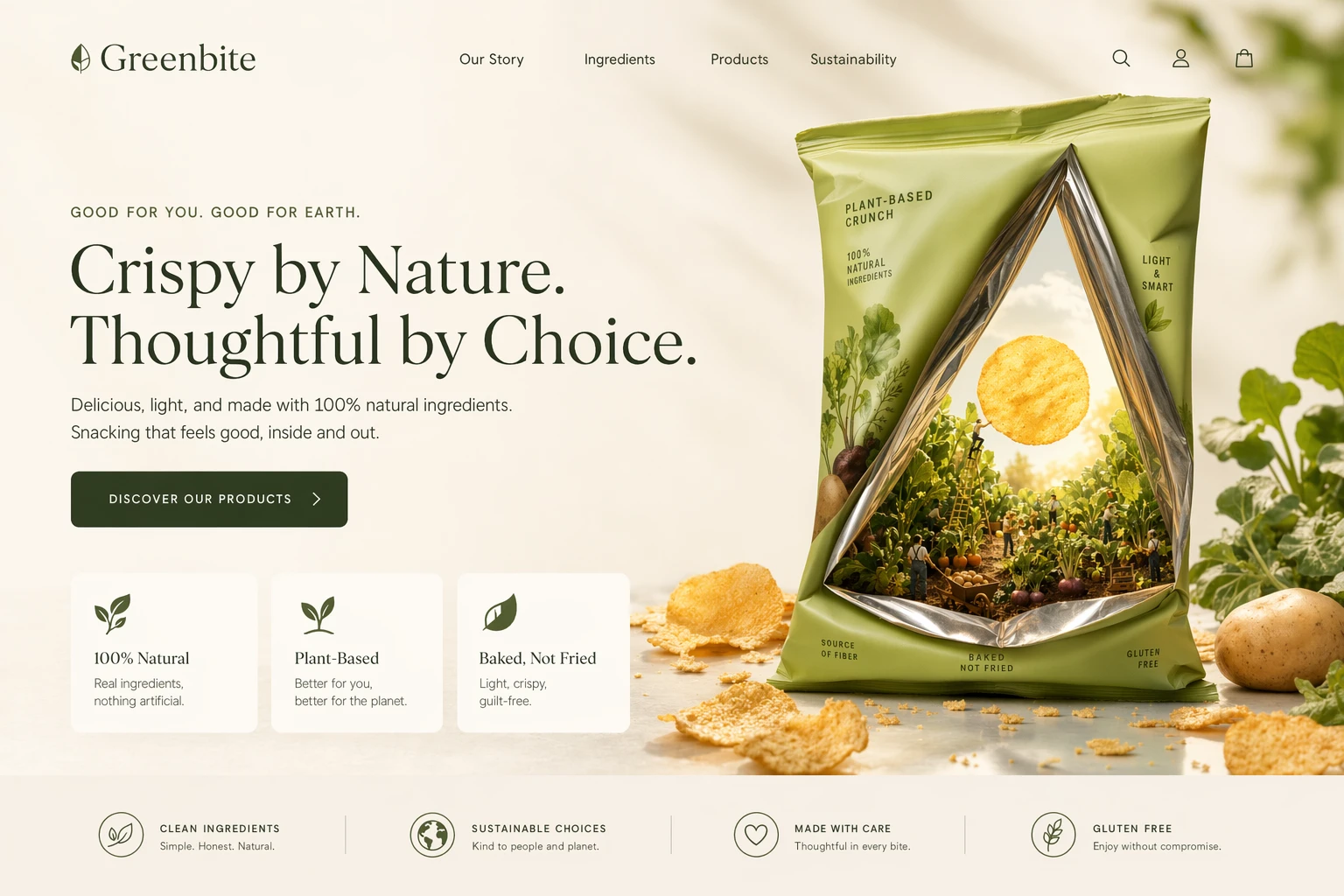
A small snack brand does not need to act like a miniature corporation. It needs a workflow that lets product, design, and marketing develop together.
Consider a small potato chip company trying to launch its first serious brand. The product is real: a better chip, a memorable flavor, maybe a local ingredient story, maybe a cleaner label, maybe a texture that makes the bag worth picking up twice. But the business is not built by the chip alone.
The company also needs packaging, a name, a logo, a product page, retail sell sheets, social posts, launch photography, flavor descriptions, a wholesale pitch deck, and a simple website that makes the brand feel credible. For a large consumer packaged goods company, those jobs are distributed across product, brand, creative, web, ecommerce, and retail teams. For a small company, they often belong to two people and a very long weekend.
This is exactly where an AI agent workspace changes the shape of the work. Not because AI replaces taste, product judgment, or customer understanding. It does not. But it can compress the production layer around those decisions, turning one clear brand idea into the many assets a small company needs to look real in the market.
The Real Problem Is Not Making a Bag
Packaging matters, but the packaging is only one expression of the brand. A chip bag has to work on a shelf, in a thumbnail, in a product page hero, in a delivery app listing, in a retail buyer deck, and in a TikTok frame. If each of those formats is created separately, the brand starts to fragment before it even launches.
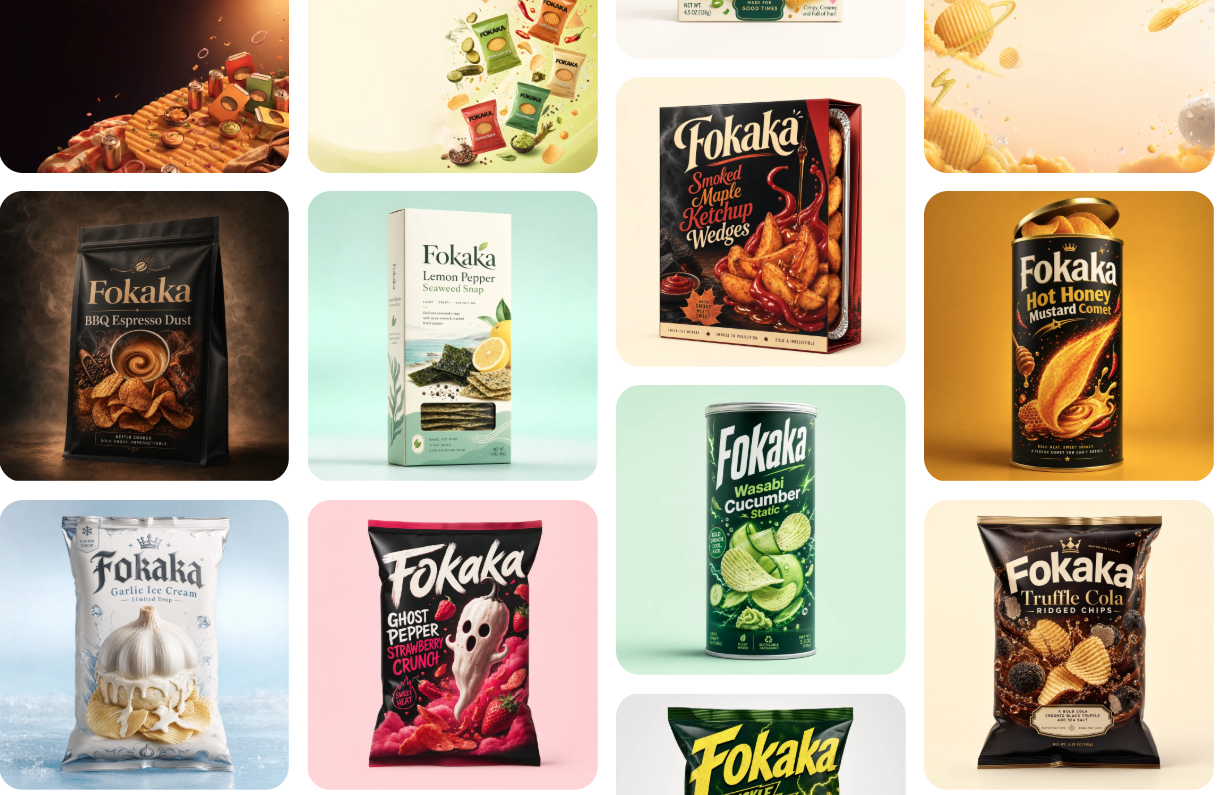
A common small-brand mistake is treating each asset as its own project. The founder designs a bag in one tool, writes the website in another, asks a freelancer for social templates, builds a pitch deck from scratch, and later realizes the tone and visuals do not quite match. Nothing is terrible, but nothing compounds.
The better approach is to treat the brand as a reusable source system. Start with the core: product promise, audience, flavor story, packaging cues, tone of voice, and visual principles. Then let every format inherit from that source.
Start With a Brand Brief That Can Become Work
The brief for a chip brand should not be a vague paragraph about being “bold” or “fun.” It should be operational enough for agents to build from. Who is the chip for? Is it a premium pantry snack, a spicy convenience-store impulse buy, a better-for-you lunchbox option, or a craft flavor for food people? What does the packaging need to signal in two seconds? What words should the brand avoid? What claims are safe to make?
Once that brief exists, the workflow can branch. A copy agent turns it into flavor names and product descriptions. A design agent explores packaging directions. A web agent creates the homepage structure. A presentation agent builds the retailer pitch. A content agent creates launch posts and email copy. Each agent is doing a different job, but the source is the same.
This is the practical meaning of build once, remix everywhere. The company is not generating random assets. It is building a reusable brand system and letting that system travel.
Product, UI, and Marketing Should Inform Each Other
In traditional workflows, product, UI, and marketing often move in sequence. The product gets defined, then the package gets designed, then the website gets built, then the marketing team tries to make a campaign out of whatever already exists. Small teams rarely have the time to run that cleanly.
For a chip startup, it is often better to develop these pieces together. A flavor name that looks great on a bag may also create the best homepage headline. A product benefit that performs well in ad copy may deserve a stronger position on the package. A website section that explains the ingredient story may reveal language that belongs in the wholesale deck.
An AI workspace helps because it makes iteration across formats cheaper. The founder can compare three packaging directions, three homepage narratives, and three launch campaign angles without commissioning a separate project for each one. The work becomes visible earlier, which makes judgment easier.
This does not remove the need for human taste. It gives taste more material to judge.
What the First Launch Workflow Could Look Like
For a small chip brand, the first complete workflow might look like this:
1. Define the source brief. Product promise, flavor lineup, audience, retail channel, price position, tone, visual references, and claims constraints.
2. Generate the brand system. Logo directions, color palette, type style, packaging hierarchy, flavor naming conventions, and photography mood.
3. Build the website UI. Homepage hero, product cards, flavor pages, subscription or store-locator CTA, FAQ, and wholesale inquiry section.
4. Create launch assets. Social graphics, short video scripts, product description variants, email launch copy, retailer one-pager, and pitch deck outline.
5. Save the workflow as a template. When the second flavor launches, the team should not rebuild from zero. It should update the source brief and reuse the system.
Why This Matters More for Small Companies
Large companies can absorb inefficient workflows because they have teams, budgets, and agencies. Small companies cannot. Every context switch matters. Every misaligned asset costs real momentum. Every week spent waiting for basic creative production is a week the product is not learning from the market.
That is why a connected workspace is not just a convenience for a small brand. It is a strategic advantage. It lets the company appear more coherent than its headcount would suggest. It lets a founder test product positioning before committing to a full production run. It lets marketing begin while the product system is still being refined.
The point is not to make a chip company look artificially big. The point is to let it move like a modern small team: clear idea, fast assets, consistent execution, reusable workflow.
The Brand Is the Workflow
For a small chip company, the brand is not just the logo on the bag. It is the way the product story moves across packaging, web, ecommerce, retail, social, and customer conversation. If those pieces are disconnected, the brand feels smaller and less trustworthy. If they are connected, the company can feel focused from day one.
This is where AI becomes useful beyond novelty. It is not about making one clever image of a chip bag. It is about helping a small team build the operating system around the product: the reusable assets, editable outputs, and connected workflows that make every launch after the first one faster.
A good chip can get someone to try the product once. A coherent product, UI, and marketing system gives the company a real chance to become a brand.
Folkos: The agent workspace, reimagined.
Build once, remix everywhere.
Get started free →