What Is an AI Agent Workspace — And Why It's Not Just Another AI Tool
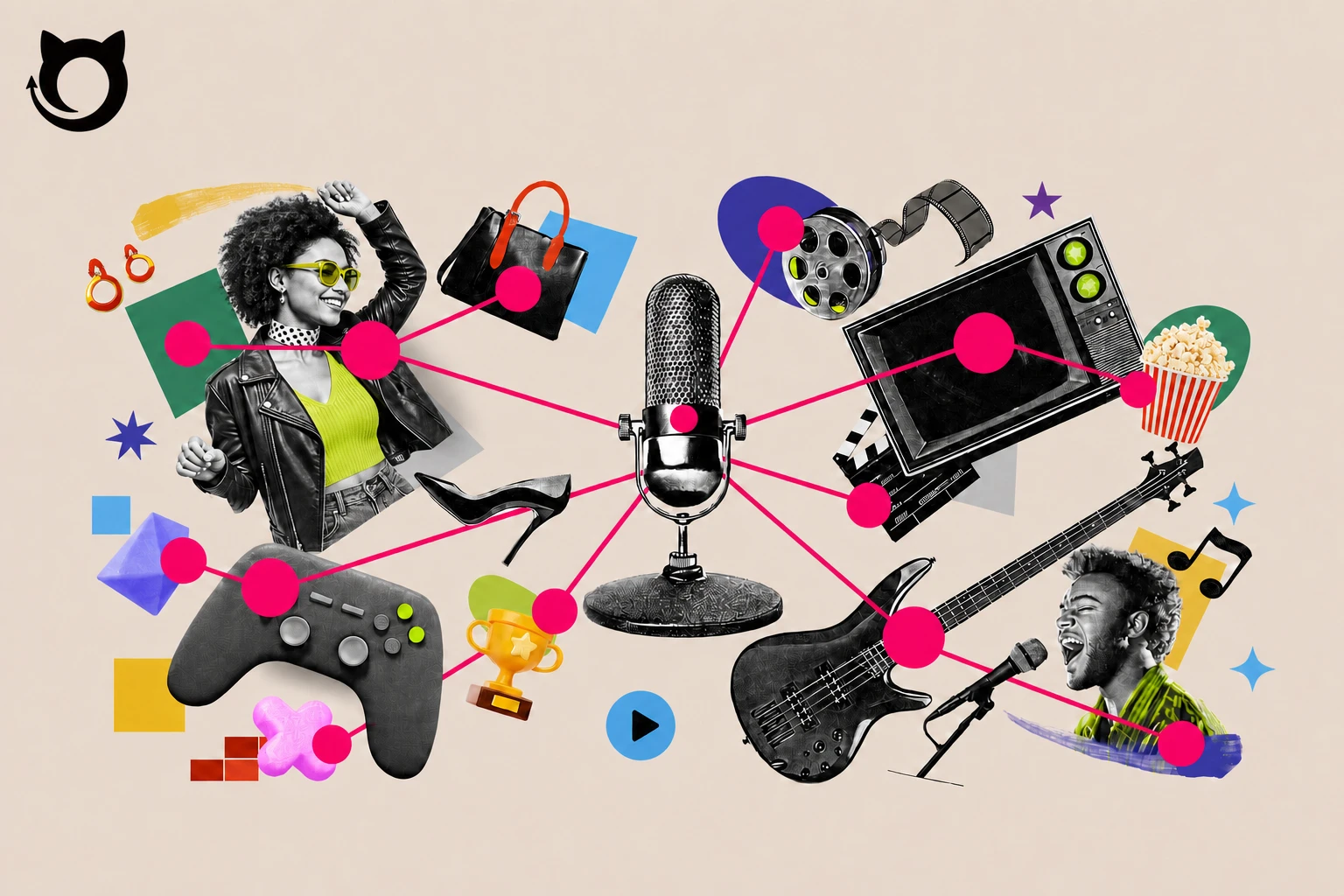
The next shift in how we work isn't about better prompts. It's about where the work actually lives.
There's a version of AI adoption that most teams are stuck in right now. They have a chatbot for writing, a separate tool for images, another for presentations, and maybe a fourth for video. Each one is impressive in isolation. Together, they create a fragmented mess — outputs scattered across tabs, nothing editable, nothing reusable, nothing connected.
This is the gap that the concept of an AI agent workspace was built to fill. But the term is still new enough that it means different things to different people. So let's be precise about what it actually is — and more importantly, what it makes possible.
The Problem With Point Solutions
When AI tools first went mainstream, the natural response was to find the best tool for each job. The best AI image generator. The best AI writing assistant. The best AI slide builder.
That approach made sense at the time. It doesn't anymore.
The real cost of fragmented AI tools isn't the subscription fees — it's the workflow tax. Every time you move output from one tool into another, you lose context. Every time you regenerate something because the original wasn't saved, you lose time. Every time a teammate can't find the asset you created last Tuesday, you lose momentum.
Single-purpose AI generators are designed to impress you in a demo. They're not designed for how real work actually gets done — iteratively, collaboratively, across formats, over time.
So What Exactly Is an AI Agent Workspace?
An AI agent workspace is a platform where AI agents don't just generate outputs — they deliver work that you can edit, save, remix, and build on.
The key distinction is this: a generator gives you a result. A workspace gives you a foundation.
In a true AI agent workspace, several things are true simultaneously:
Outputs are editable. When an agent generates a presentation, a video script, a spreadsheet, or a UI mockup, that output lives in a workspace — not a chat thread. You can go back and change it. You can hand it to a colleague. It doesn't disappear when you close the tab.
Agents are specialized. Rather than one general-purpose assistant trying to do everything, an agent workspace hosts purpose-built agents — a video agent, an image agent, a document agent, a spreadsheet agent — each optimized for its domain, each accessible from the same environment.
Workflows are reusable. The real compounding value comes from templates. Once you've defined how an agent should approach a task — the steps, the format, the tone, the output structure — that workflow becomes a reusable asset. You run it once. Then you run it again. Then your team runs it. That's leverage.
Everything stays connected. Files, assets, and agent outputs exist in one place. A video generated on Monday can be referenced by a document agent on Thursday. A visual created for one campaign can be remixed for the next.
The Difference Between an AI Tool and an AI Agent
The word "agent" gets thrown around loosely in tech, so it's worth being specific.
A traditional AI tool responds to a prompt and returns an output. The interaction is stateless — it doesn't remember what you did before, doesn't plan ahead, and doesn't take multi-step actions on your behalf.
An AI agent is different in three ways:
- It can plan. Given a goal, an agent breaks it down into steps and executes them in sequence — calling tools, processing files, making decisions along the way.
- It can act. Agents don't just generate text. They can write to files, trigger other workflows, process data, and produce structured outputs across multiple formats.
- It can be templated. An agent's behavior — its role, its skills, its workflow logic — can be defined once and reused indefinitely. This is what transforms a one-off interaction into a repeatable process.
When you put multiple specialized agents into a shared workspace, with shared context and shared assets, you get something qualitatively different from any individual AI tool. You get infrastructure for how work gets done.
What This Looks Like in Practice
Consider a content team preparing for a product launch. Traditionally, this involves a dozen tools, a lot of copy-pasting, and at least one person whose job is essentially to move files between systems.
In an AI agent workspace, the workflow looks different:
A document agent drafts the launch brief. That brief is passed to a presentation agent, which generates a pitch deck — structured, formatted, ready to edit. A video agent picks up the same brief and produces a short explainer. An image agent generates campaign visuals. A spreadsheet agent builds the content calendar.
None of these outputs sit in a chat thread. They live in the workspace, where the team can edit, comment, remix, and publish. The brief becomes the source of truth. Everything else is derived from it — automatically, consistently, and without starting from scratch each time.
This is what "build once, remix everywhere" actually means in practice. Not a tagline — a workflow.
Who an AI Agent Workspace Is Built For
The honest answer is: anyone who produces work regularly and feels like their current AI tools aren't adding up to anything.
But a few profiles stand out:
Content and marketing teams who need to produce high volumes of assets — videos, decks, social posts, briefs — and can't afford to rebuild from zero every campaign cycle.
Creators who work across formats and want their ideas to propagate into video, image, music, and written form without switching contexts constantly.
Startups and product teams who need to move from idea to prototype, pitch, and launch assets quickly — without a full creative or marketing department behind them.
Anyone who's realized that having ten AI subscriptions doesn't mean having a coherent AI workflow.
The Shift That's Happening
The first wave of AI tools was about capability — can AI do this thing at all? Write a blog post? Generate an image? Build a slide?
The answer, broadly, is yes. That question is settled.
The second wave is about infrastructure — how do you turn those capabilities into something that actually changes how your team works? How do you make AI outputs persistent, editable, and reusable? How do you build workflows that compound over time instead of resetting with every new chat session?
That's the question an AI agent workspace is designed to answer.
The tools that win the next few years won't be the ones with the most impressive single-output demos. They'll be the ones that make AI work feel less like magic and more like a system — one that your team can rely on, build on, and grow with.
The workspace is where work happens. It always has been. The question is whether your AI tools are actually part of it.
Folkos: The agent workspace, reimagined.
Build once, remix everywhere.
Get started free →